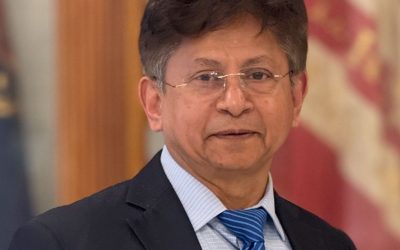
Tipu Chowdhury
প্রিন্ট
সোমবার, ২০ অক্টোবর ২০২৫ সর্বশেষ আপডেট : ১১:৩৪ পূর্বাহ্ণ

Over the past 14 months, Bangladesh has found itself grappling with escalating political unrest, ironically under the banner of restoring democracy. While experts offer analysis, it is the ordinary citizens who seem most attuned to the shifting realities. Paradoxically, the very accusations once leveled against the previous government—judicial overreach, extrajudicial killings, and institutional corruption—are now being amplified under the current administration.
The military’s involvement in politics has eroded its perceived neutrality, while public trust in the police has plummeted. Citizens are increasingly aware of political manipulation, suspecting that orchestrated instability is being used to distract from deeper systemic issues.
As the nation approaches a pivotal election, a controversial strategy has emerged. Chief Advisor Dr. Muhammad Yunus is reportedly seeking to retain power post-election, allegedly aiming to secure 100 parliamentary seats through close allies, including SDG coordinator Lamia Morshed. Sources suggest that Jamaat-e-Islami is prepared to cede 100 seats to Yunus, potentially enabling a Yunus-BNP alliance to dominate parliament and influence government formation. Beneath this arrangement lies a hidden layer: 51 of those seats are rumored to be earmarked for Jamaat candidates under rebranded identities. Critics warn that BNP may be reduced to a symbolic presence—tethered but powerless.
Under the guise of national reform, Bangladesh is witnessing a surge in high-risk defense deals and procurement of military equipment, seen by many as part of a broader effort to curry favor with Western powers ahead of what some fear may be a staged election. Despite no history of foreign aggression in its 54-year history, the country now faces narratives of external threats—coinciding with the rise of a so-called “peace envoy.”
To truly understand the state of Bangladesh’s economy and governance, one must speak with day laborers, factory workers, entrepreneurs, civil servants, exporters, and educators. With the collapse of key institutions—police, military, education, and economy—there are now attempts to fracture social harmony, religious values, and the national framework.
At the center of this transformation stands Dr. Yunus, backed by factions within BNP, Jamaat-e-Islami, and hybrid elements of the Awami League. A deal allocating 100 parliamentary seats has reportedly paved the way for Tarique Rahman’s return, sparking internal discord within BNP. Jamaat, unwilling to miss its political opportunity, has confirmed its claim to 100 seats, with 51 allegedly reserved for its covert candidates under Yunus’s umbrella.
This strategy has politically weakened BNP, with analysts predicting a dramatic decline in its influence. In response, the Bangladeshi public appears poised to reject the upcoming election as a farce. Simultaneously, support is growing for a reformed Awami League to lead the nation through its current crisis.
Experts warn that such maneuvers threaten democratic principles and jeopardize political stability. Without transparent and inclusive elections, Bangladesh risks descending into further turmoil.
Meanwhile, U.S. military activity in Chattogram and the Bay of Bengal has raised alarms. American warships and aircraft have made repeated visits, and a Norwegian research vessel has conducted surveys of marine resources, sparking fears of foreign exploitation of valuable minerals like uranium and thorium. Reports indicate that under the “Quad Ports for Future” initiative, the U.S. seeks access to a Bangladeshi port to counter China’s regional influence. Additionally, there are claims of American interest in leasing part of Saint Martin’s Island for 99 years, possibly for military use.
Geopolitical analysts caution that a broader strategy is unfolding around Bangladesh and Myanmar, with speculation about the creation of a “Christian state” akin to East Timor. Prime Minister Sheikh Hasina has previously warned against such proposals. Citizens are now awakening to the historical deceptions of political parties and leaders, as well as the roles and interests of foreign powers.
Multiple sources allege that Dr. Yunus is being positioned as a proxy leader to serve Western interests, with promises of future support for his candidacy as UN Secretary-General. They argue this is part of a larger effort to destabilize Bangladesh and obstruct China’s Belt and Road Initiative.
Caught in the crossfire of American, Pakistani, Indian, and Chinese interests, Bangladesh and Myanmar are being likened to geopolitical pawns—mere “toilets” in a global power struggle. And who guards these toilets? Ask the people of Bangladesh, and the answer comes swiftly.
Final Satire:
As BNP reaches for the banana hanging before the mirror, it may not be startled by the crowd of monkeys staring back—but it will surely witness the full-length tragedy of its political helplessness. Produced by Yunus, directed by Jamaat-e-Islami Bangladesh.
(Tipu Chowdhury
Certified Sustainable Business Strategist-Harvard Business School.
Columnist,Activist,
Analyst. Boston,USA)

Posted ১০:১৮ পূর্বাহ্ণ | সোমবার, ২০ অক্টোবর ২০২৫
nyvoice24 | New York Voice 24